
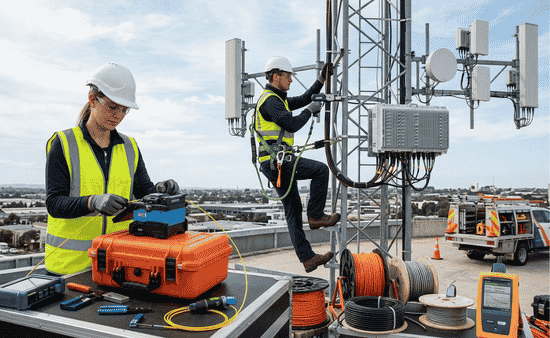
The telecommunications industry is upgrading at remarkable speeds. Technicians are building the backbone of global connectivity, moving massive amounts of data across cities and oceans. Building these networks requires specific, high-precision equipment to ensure reliable connections and minimal downtime.
Core Tools for Cable Management and Connectivity
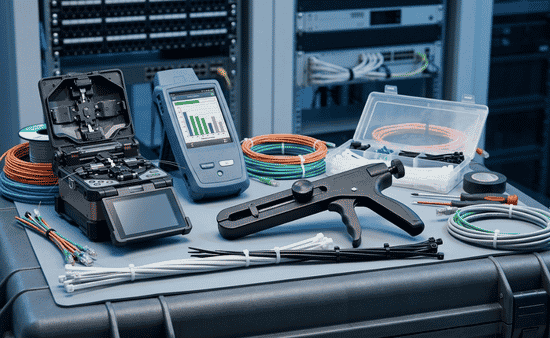
Managing miles of delicate cables is a daily reality for telecom teams. Proper cable management ensures long-term network performance and makes future maintenance significantly easier.
Fiber Optic Fusion Splicers
Joining two optical fibers requires pinpoint accuracy. Fusion splicers align and melt microscopic glass fibers together. This process creates a seamless path for light signals, minimizing signal loss across vast distances.
Cable Certifiers
After laying cables, technicians must verify that they meet strict industry standards. Cable certifiers test bandwidth capabilities and ensure the physical installation supports the required data speeds.
Cable Securing Devices
Fastening cables correctly prevents long-term damage and signal degradation. Using a reliable cable tie tension tool allows technicians to cut ties cleanly and apply the exact amount of pressure needed. This specific tool prevents workers from accidentally crushing sensitive fiber bundles during installation.
Advanced Equipment for Network Testing and Optimization
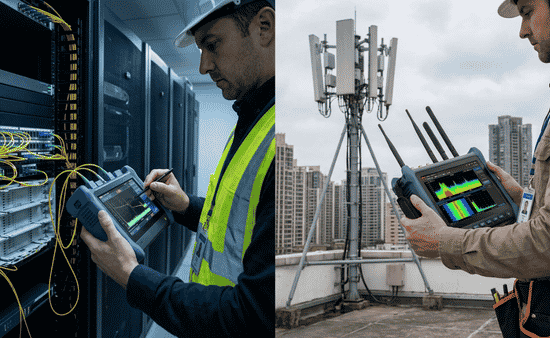
Finding a fault in a sprawling network can feel impossible without the right diagnostic gear. Advanced testing tools help technicians pinpoint issues before they cause widespread outages.
Optical Time-Domain Reflectometers (OTDRs)
An OTDR shoots light pulses down a fiber optic cable to locate breaks, tight bends, or faulty splices. It provides technicians with a precise visual map of the entire cable run, making troubleshooting highly efficient.
Spectrum Analyzers
Wireless networks rely on clean radio frequencies to function properly. Spectrum analyzers detect external interference and measure signal strength. Teams use this data to optimize antenna placements and manage frequency usage across dense urban environments.
Safety Gear and Best Practices in Telecom Work
Working on telecom sites frequently involves scaling heights, entering confined spaces, and navigating high-voltage areas. High-quality protective equipment is entirely non-negotiable.
Personal Protective Equipment (PPE)
Hard hats, insulated gloves, and high-visibility clothing form the baseline of technician safety. Full-body fall protection harnesses and reliable lanyards are critical when climbing cell towers or working on elevated platforms.
Site Best Practices
Safety extends well beyond wearing the right gear. Teams should conduct thorough risk assessments before starting any physical labor. Maintaining clear communication and adhering to strict lockout/tagout procedures prevents severe accidents and equipment damage.
The Impact of 5G and IoT on Telecom Equipment Needs
The rollout of 5G networks and the explosion of the Internet of Things (IoT) are changing how installations happen. Technicians are now dealing with higher frequencies, denser networks of small cells, and massive fiber backhauls.
Older testing equipment often lacks the frequency range required for 5G millimeter waves. Installers must upgrade to modern meters and analyzers capable of handling multi-gigabit speeds and massive device density. This technological shift forces teams to continuously train on new software, calibration techniques, and advanced hardware.
Conclusion
Upgrading global network infrastructure demands a sharp set of skills and a highly reliable set of tools. Investing in high-quality fusion splicers, advanced network testers, and proper safety gear ensures every job meets rigorous standards. As wireless and fiber networks continue to evolve, staying updated on the latest equipment will keep your installations running smoothly. Take an inventory of your current gear today, and replace outdated testing devices to keep your team competitive.