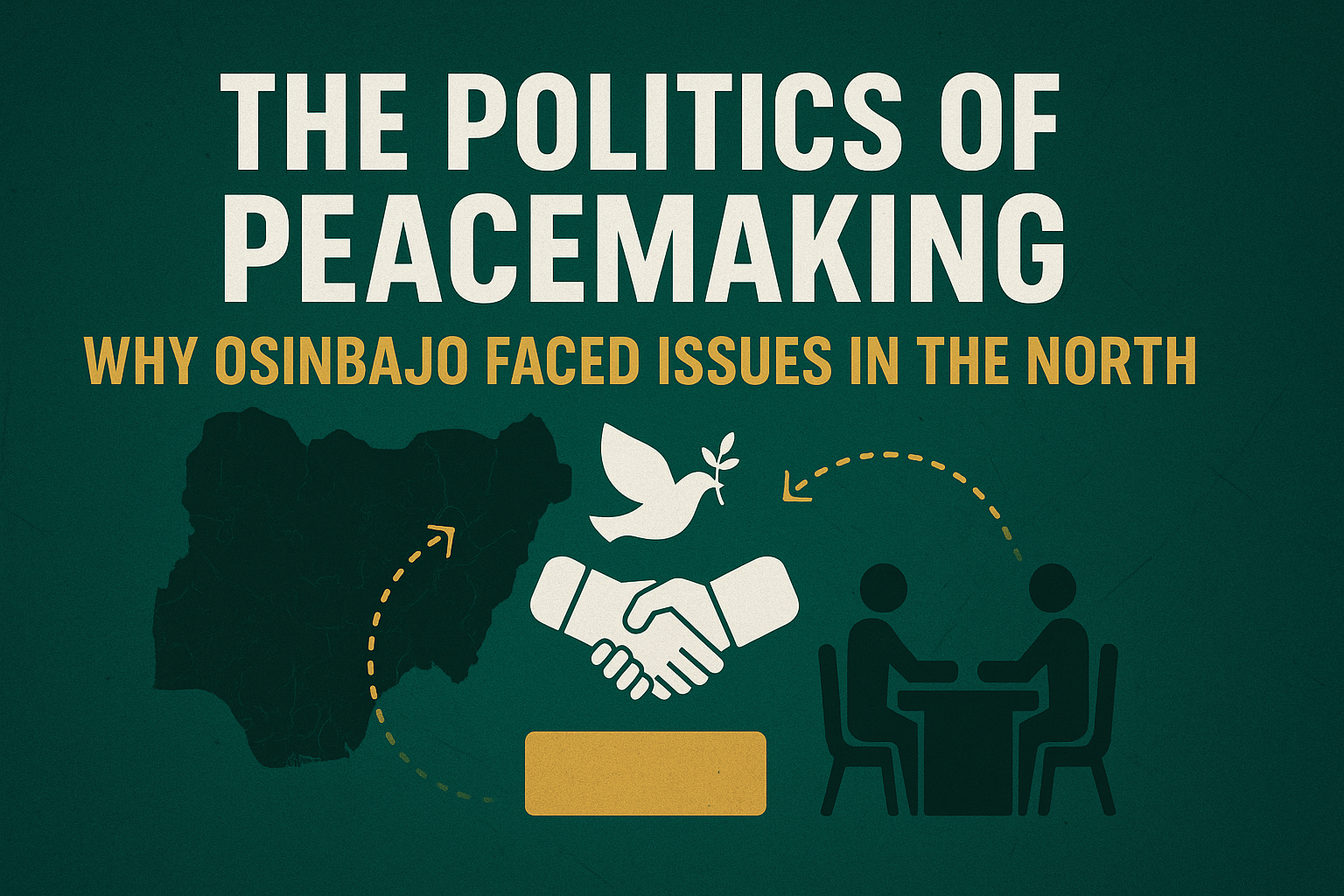
When Vice President Yemi Osinbajo declared that he felt a sense of “shame” that some people in the North were starting to have issues with him, it was more than a personal lament—it was a glimpse into the immense political pressure he faced while holding the fort during President Muhammadu Buhari’s extended medical absences in 2017.
That period was a severe test of Nigeria’s unity. Ethnic tensions were skyrocketing, culminating in the infamous “quit notice” issued by some Northern youth groups to Igbos living in the region. Osinbajo, acting as President, launched an aggressive series of consultations with leaders across the country to douse the tension and assert the supremacy of the Nigerian Constitution.
His commitment to national unity and his decisive actions during that volatile period, while praised globally, inevitably put him at odds with powerful regional forces and political interests. We explore the two key areas where Osinbajo’s leadership style and policies likely created the “issues” he referenced.
The North/South Crisis: Choosing Unity Over Sectionalism
The core of the alleged conflict stemmed from Osinbajo’s direct, non-partisan approach to the ethnic crisis that threatened to tear the country apart in mid-2017.
A. Condemning the “Quit Notice”
Osinbajo’s primary goal was to ensure the constitutional right of every Nigerian to live anywhere in the country without fear. This meant directly condemning the “quit notice” and vowing to use the “full force of the law” against those making hate speech or promoting division.
-
The Problem for Some Northern Groups: The aggressive response meant that the Acting President refused to give political cover to the Northern youth groups who issued the notice. He treated the notice as an act of sedition that destabilized the country, rather than a legitimate regional political maneuver. This stance, which prioritized national unity over regional sentiment, was interpreted by some political blocs as a betrayal or a lack of understanding of “Northern interests.”
B. Dialogue Without Reservation
During his consultations with Northern traditional rulers, political elders, and governors, Osinbajo was unwavering: Nigeria must remain one. He emphasized that the government was not deaf to legitimate grievances but insisted they must be expressed “graciously and managed with mutuality rather than with scorn and disdain.”
By engaging all sides—both the South-East agitators and the Northern counter-agitators—as equal players in a conversation about national peace, he subtly rejected the idea that any region held the moral high ground in demanding division. This balanced approach, while statesmanlike, often infuriates hardline politicians who prefer their own regional grievances to be treated with exclusivity.
The Leadership Style: Decisive Action Versus Status Quo
A second, more subtle friction point was Osinbajo’s leadership style, which contrasted sharply with the often slow, deliberate approach of his principal, President Buhari.
A. The Power of Acting President
During his spells as Acting President, Osinbajo took several high-profile, decisive actions that demonstrated his willingness to tackle entrenched interests and bureaucratic inertia. One notable move was his Executive Order directing all International Oil Companies (IOCs) to relocate their headquarters to the Niger Delta, an attempt to address long-standing grievances in the region.
-
The Conflict: These quick, decisive moves, especially those that affected high-level political appointments or economic interests, were seen by some elements within the powerful “cabal” or inner circle of the Presidency as overreaching. This created internal political headwinds. Since many of these entrenched interests hailed from the North, any issues related to perceived power overreach were framed as a Northern political issue against the Vice President.
B. Challenging Regional Elites on Development
Osinbajo has a history of making direct, analytical comments about the problems of regional development, including in the North. In a 2015 speech at the Northern Reawakening Forum (NRF) summit, he directly challenged the region’s elite, suggesting they were responsible for the North’s backwardness due to abandoning the diligence and selfless service of their founding fathers.
This kind of direct, non-sugarcoated critique, delivered by someone from a different region, inevitably generates “issues.” While he aimed to spur reform, political elites often prefer to blame external factors rather than face internal accountability.
The “Shame” of a Bridge Builder
Osinbajo’s expression of shame wasn’t about a policy failure; it was the shame of a bridge-builder who realized his efforts were being met with political suspicion rather than collaboration.
He was a Christian pastor from the South-West, partnered with a Muslim former General from the North. He was the perfect political bridge. When a political figure like Osinbajo, who invested heavily in promoting unity, is met with resistance from the very people he sought to protect, it signals the depth of Nigeria’s challenge: political trust often trumps constitutional mandate.
The lesson from this period is a vital one for Nigerian democracy: the moment a leader prioritizes the Nigerian Constitution and the national interest over the specific, often selfish demands of a regional political bloc, they risk becoming a target. Osinbajo was willing to take that risk to keep the country whole.