If you’ve been researching how to start a cleaning business, you’re already ahead of most beginners who jump in without a plan. You’re probably excited by the idea of building something flexible, profitable, and low-cost.
I’ve seen plenty of people launch successful cleaning companies with limited savings, and the ones who thrive follow one simple rule: create a roadmap before you take on your first client.
This guide walks you through every step—research, legal setup, operations, marketing, and growth—so you can launch with confidence and avoid costly mistakes.
What Should You Research Before Starting a Cleaning Business?

Before you invest in supplies or design a logo, get the foundation right. Here’s how to research and plan your new cleaning company in a way that actually sets you up for success.
Choose Your Niche Early
Your niche affects your pricing, equipment, and marketing. Pick the one that feels realistic for you:
- Residential cleaning – flexible hours, repeat clients
- Commercial cleaning – bigger contracts, consistent schedules
- Airbnb/short-term rental turnover – fast-paced, high demand
- Move-in/move-out cleaning – higher-paying deep cleans
- Post-construction cleanup – requires stronger equipment
- Eco-friendly/green cleaning – great for eco-focused markets
Choosing early helps you avoid buying unnecessary supplies and lets you position your business clearly.
Study Your Local Market
Take an afternoon and look at who’s already cleaning homes or offices in your area.
- Compare service menus
- Note price ranges
- Check customer reviews
- Look for gaps (no green cleaning, no deep-clean packages, no flexible hours, etc.)
This gives you a strong understanding of what clients want—and what competitors aren’t offering.
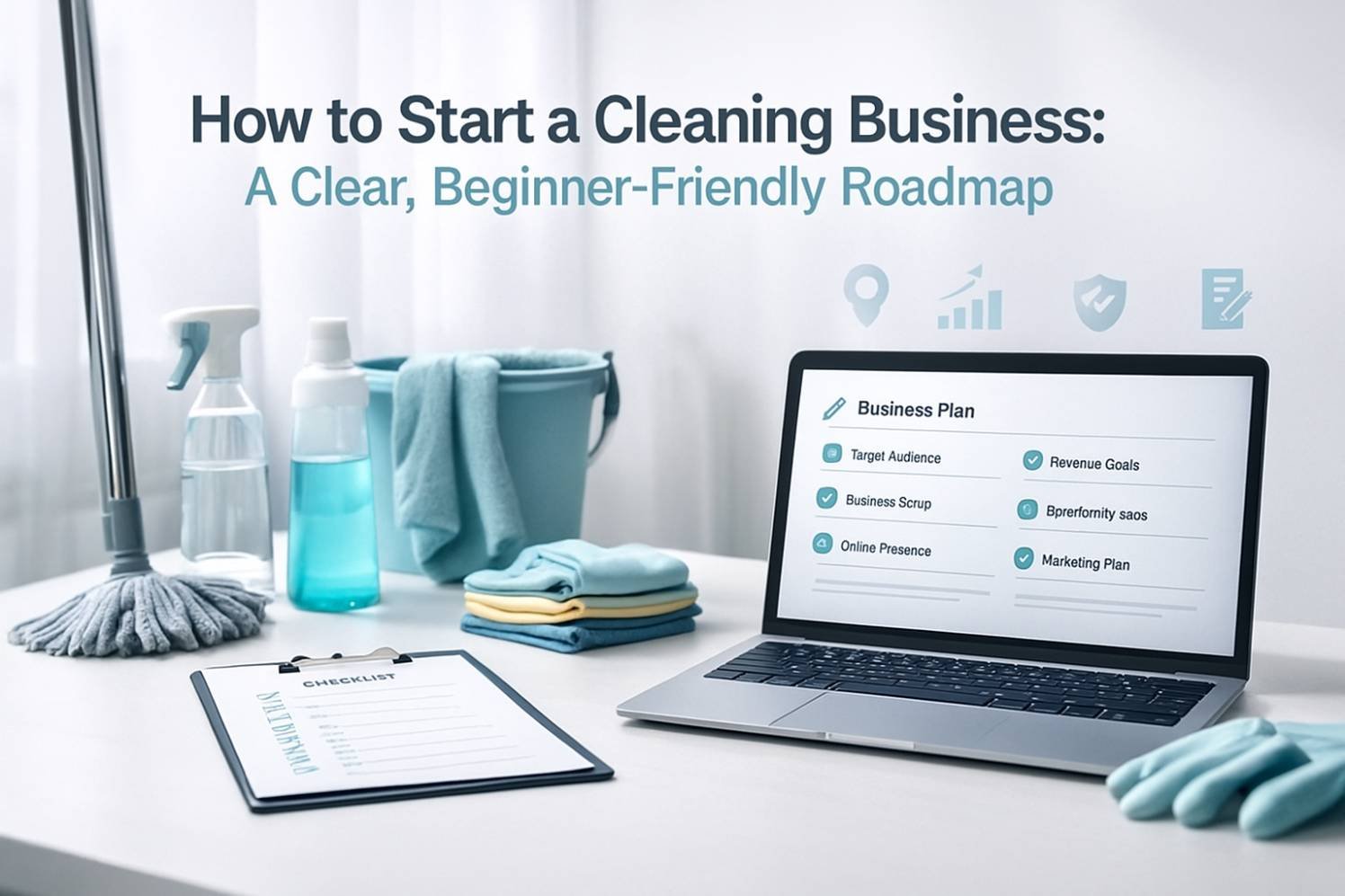
Create a Simple Business Plan
You don’t need something corporate-level. A lean plan is perfect.
Include:
- Your business goals
- Your niche and target market
- The exact services you’ll offer
- Your pricing strategy
- Estimated startup and monthly expenses
- Revenue goals for the first 6–12 months
A quick 2–3 page plan keeps you focused and helps guide your decisions when things get busy.
What Legal and Financial Steps Do You Need to Start a Cleaning Business?

This part can feel intimidating, but it’s actually very straightforward.
Pick the Right Business Structure
Most cleaners choose one of these:
- Sole Proprietorship — easiest and cheapest
- LLC — protects your personal assets and is the most common for cleaning businesses
- Corporation — usually for large, expanding teams
If you can afford it, starting with an LLC offers peace of mind.
Register Your Business & Secure Licenses
A few administrative steps set you up legally:
- Register your business name with your local/state authority
- Check if your city or county requires a local business license
- Make sure your niche (e.g., commercial, construction cleanup) doesn’t have additional requirements
These rules vary by location, so double-check your area’s regulations.
Get an EIN and Open a Business Bank Account
An EIN from the IRS is free and helpful if you:
- Plan to hire
- Form an LLC or corporation
- Don’t want to use your Social Security number on forms
Once you have it, open a business bank account so your income and expenses stay clean and easy to track.
Secure the Right Insurance
Cleaning involves entering clients’ homes or businesses, so insurance is non-negotiable.
You’ll need:
- General Liability Insurance — covers damages or accidents
- Workers’ Compensation — required if you hire employees
Clients are far more likely to trust (and book) a fully insured cleaner.
Know Your Funding Options
Startup costs are low, but if you need extra support, consider:
- Small business loans
- Microloans
- Personal savings
- Crowdfunding
- Credit union financing
Many cleaners launch for under $500, but commercial setups may need extra funding.
What Equipment and Operational Systems Do You Need?

This is where your business becomes real. Equip yourself smartly to avoid overspending
Buy the Right Supplies (Based on Your Niche)
For residential cleaning:
- Microfiber cloths
- All-purpose cleaners
- Glass cleaner
- Mops and buckets
- Brooms and dustpans
- A reliable vacuum
- Gloves and protective gear
For commercial or specialized services:
- HEPA vacuums
- Floor scrubbers
- Steam cleaners
- High-capacity cart setups
- EPA-approved disinfectants
Focus on quality and efficiency—better tools speed up jobs and increase profit.
Set Up Your Basic Office System
You don’t need a physical office. You need organization.
- A laptop or tablet
- A dedicated business phone number
- Email templates
- Scheduling tools
- Invoicing and payment systems
You can use simple tools at first (Google Calendar + Sheets), then move to cleaning-business software when you grow.
Build a Pricing Strategy That Makes Sense
Your rates should reflect:
- Your labor time
- Supply costs
- Local competitor pricing
- Job difficulty
- Travel time
Common pricing models:
- Hourly – Simple and transparent
- Per project/flat rate – Great for home cleanings
- Per square foot – Standard for commercial cleaning
Start simple and adjust as you gain experience.
Plan for Hiring (If You Want to Expand)
If you grow beyond a solo operation:
- Create a clear job description
- Conduct background checks
- Train new cleaners using checklists and standard procedures
- Follow all state labor laws
A well-trained team is the backbone of a scalable cleaning business.
How Do You Market and Grow a New Cleaning Business?

Getting your first clients is easier than you think—if you follow a few proven steps.
Build a Clean, Clear Website
It should include:
- Your services
- Service area
- Pricing style
- Before-and-after photos
- Contact options
- Online booking (if possible)
A simple site is enough to make you look established.
Optimize Your Online Presence
This part matters the most.
- Create a Google Business Profile
- Add high-quality photos
- Ask happy clients for reviews
- Use local keywords (e.g., “house cleaning in Dallas”)
- List your business in local directories
Local SEO is how most cleaners get their clients.
Get Clients Through Networking & Local Visibility
Many cleaning businesses get their first jobs through simple outreach.
Try:
- Posting in neighborhood Facebook groups
- Connecting with realtors and property managers
- Printing flyers for local bulletin boards
- Offering referral bonuses
- Sharing before-and-after photos on social media
Consistency makes a huge difference.
Frequently Asked Questions
1. How much does it cost to start a cleaning business?
Most people can start with $200 to $2,000, depending on the services offered and equipment needed. Residential cleaning usually costs the least to start, while commercial or specialty services may require higher upfront investment.
2. Do I need previous experience to start a cleaning business?
No. Many successful cleaning owners began with zero experience. What matters most is reliability, clear communication, consistency, and learning proper cleaning methods through training or practice.
3. How long does it take to get clients?
Many new cleaners find their first client within days by promoting in local groups, using Google Business Profile, and tapping into their personal network. Building recurring clients takes longer, but consistent marketing leads to steady growth.
4. What’s the earning potential for a cleaning business?
Solo residential cleaners often earn $30,000 to $60,000 per year, while teams or commercial-focused businesses can reach six figures or more, depending on location, pricing, and services offered.
Conclusion — The Smart Way to Learn How to Start a Cleaning Business
Learning how to start a cleaning business isn’t complicated when you break it into clear steps—research, legal setup, operations, marketing, and growth.
By choosing the right niche, staying compliant with laws, building efficient systems, and marketing consistently, you set the foundation for a profitable and sustainable service business that can grow with you over time.